
The Comprehensive History of the Figures Who Defined the Thai Music Industry
The Thai music industry is a complex ecosystem where ancient court traditions, folk rhythms, and Western pop influences converge. To understand the modern sound of Thailand, one must look at the key individuals who acted as catalysts for change. These musicians and producers built the infrastructure of the industry, pioneered new genres, and navigated the delicate balance between national identity and global trends. This history examines the pioneers of the Luk Thung and Luk Krung eras, the titans of the 1980s pop explosion, and the independent visionaries who redefined the Thai sound for the digital age.
The Mastermind of Modernity: Eua Sunthornsanan and the Suntharaphorn Legacy
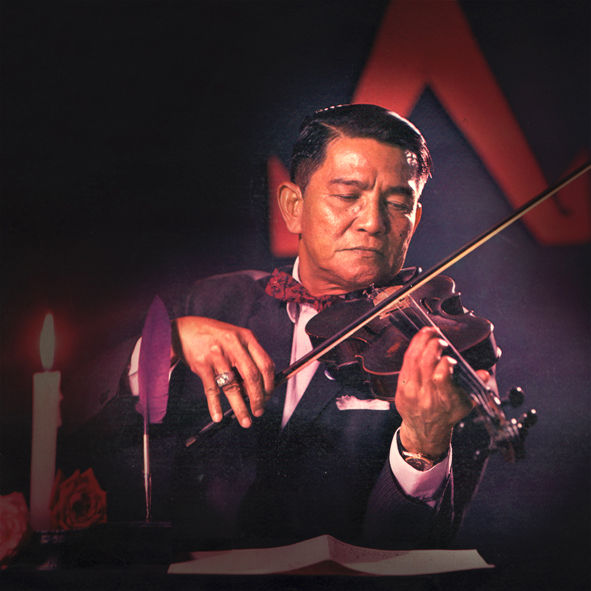
Eua Sunthornsanan remains perhaps the most significant figure in the history of Thai popular music. Born in 1910, Eua was classically trained in Western violin and music theory at the Royal School of Music in Thailand. This foundation was critical to what he was about to do. Before Eua, Thai music was largely divided between traditional Thai classical music and Western imports. He saw an opportunity to create a middle ground.
In 1939, he formed the Suntharaphorn Band, the first major Western style big band in the country. Eua’s brilliance lay in his ability to take the complex melodic scales of traditional Thai music and arrange them for Western instruments like the saxophone, trumpet, and piano. This genre became known as Luk Krung, or "Child of the City." His music was sophisticated, romantic, and technically precise.
His success was driven by a deep patriotic duty and a desire to modernize the Thai spirit. During the post World War II era, his songs were used by the government to promote national unity and Westernized social standards. Eua composed over 2,000 songs, many of which are still played at national celebrations and formal dances today. For students of music history, Eua is the primary case study in how to successfully hybridize two disparate musical cultures. He provided the technical template that every Thai pop producer would follow for the next century.
The Voice of the People: Suraphol Sombatcharoen and the Birth of Luk Thung

While Eua Sunthornsanan was refining the sounds of the city, Suraphol Sombatcharoen was revolutionizing the sounds of the countryside. Born in 1930 in Suphan Buri, Suraphol had a humble upbringing that allowed him to connect deeply with the rural population. He is universally recognized as the "King of Luk Thung" (Child of the Fields).
Before Suraphol, rural music was seen as unrefined folk singing. Suraphol changed this by introducing a professional production style. He incorporated Latin rhythms, mambo, and even elements of American rock and roll into the traditional rural melodies. His success was fueled by his lyrical genius. He wrote about the real lives of Thai farmers, their heartbreaks, their struggles with poverty, and their sharp wit.
His drive for success was rooted in his charisma as a performer. He was a master of the stage, known for his flashy outfits and engaging storytelling. Unlike the formal Luk Krung singers, Suraphol made music that was meant for dancing and communal celebration. His impact on the industry was so great that his murder in 1968 at the height of his fame was a national tragedy. He proved that rural music was a commercial powerhouse, laying the groundwork for a genre that remains the most popular form of music in Thailand today.
The Queen of Transformation: Pumpuang Duangjan

No discussion of the Thai music industry is complete without Pumpuang Duangjan. Born in 1961 to a family of impoverished sugarcane farmers, she was illiterate and never received a formal education. Her rise to superstardom is one of the most inspiring narratives in Thai history. Pumpuang did for Luk Thung what Michael Jackson did for pop: she made it modern, visual, and incredibly polished.
Pumpuang’s success was driven by her incredible memory and ear for music. Because she could not read, she memorized thousands of songs by listening to tapes. In the 1980s, she began blending Luk Thung with the emerging sound of electronic pop and disco. This "Electronic Luk Thung" brought the genre into the neon lit nightclubs of Bangkok, bridging the gap between the rural migrant workers and the urban youth.
Her drive was fueled by a relentless work ethic. She toured constantly and became a symbol of female empowerment in a male dominated industry. Her influence is seen in every modern Thai female artist. She showed that a girl from the provinces could become the most powerful figure in the entertainment world through sheer talent and a willingness to reinvent her sound. Her death in 1992 solidified her status as a folk saint, and her music continues to be the benchmark for vocal excellence in Thailand.
The Visionary Producer: Rewat Buddhinan and the Birth of GMM Grammy

In the early 1980s, the Thai music industry was fragmented and lacked professional business structures. Rewat Buddhinan changed this forever. Educated at Thammasat University, Rewat was a musician himself, having played in the influential rock band The Impossible. He spent time in Europe and America, where he observed the inner workings of the global music business.
When he returned to Thailand, he co-founded GMM Grammy in 1983. His goal was to create a "Total Media" company that handled everything from scouting talent to production, marketing, and distribution. Rewat’s drive was toward professionalism and international standards. He was the first to implement the "Star System" in Thailand, where artists were not just singers but carefully curated brands with 360 appeal.
As a producer, he introduced modern recording techniques and a sound that was clean, radio friendly, and contemporary. He moved Thai pop, or T-Pop, away from the shadows of Western covers and toward original, high quality Thai language compositions. Every major Thai pop star of the 80s and 90s, from Bird Thongchai to Christina Aguilar, owes their career to Rewat’s vision. He transformed a collection of small record shops into a multi billion baht industry, making him the most influential business figure in Thai music history.
The Superstar: Thongchai "Bird" McIntyre

While Rewat Buddhinan built the machine, Bird Thongchai became its greatest product and a visionary in his own right. Born in 1958, Bird started his career as a bank officer before being discovered by Rewat. His success is unprecedented in Thai history and has yet to be equaled as he has sold more albums than any other artist in the country.
Bird’s influence lies in his ability to unite the entire nation. His music transcends class, age, and geography. He combined the sophistication of Luk Krung with the catchiness of modern pop and the emotional depth of traditional ballads. His drive for success was fueled by a genuine love for his audience and an unmatched work ethic. He was the first Thai artist to hold massive, high production solo concerts that rivaled those of Western stars.
Bird represents the peak of the "GMM Grammy Era." He showed how a single artist could become a national institution. His success also opened the door for Thai music to be exported to other Asian countries. Bird’s longevity, spanning over four decades and actually continues to this day, is a testament to his ability to adapt to changing musical tastes while maintaining a consistent, relatable persona.
The Indie Pioneer: Boyd Kosiyabong and the Bakery Music Revolution

In the mid-1990s, a new generation of listeners began to look for alternatives to the polished, corporate sound of GMM Grammy. Boyd Kosiyabong was the leader of this movement. Educated in the United States, Boyd returned to Thailand with a love for R&B, soul, and sophisticated pop arrangements. He co-founded Bakery Music, the country's first major independent label.
Boyd’s drive was focused on musicality and emotional honesty. He didn't look for "stars" in the traditional sense, he looked for unique voices and songwriters. His music was characterized by complex chord progressions and lyrics that explored love and faith in a modern, urban context. He introduced the "Indie" spirit to Thailand, proving that a small label could have a massive cultural impact without the backing of a giant corporation.
His success with the band Moderndog, which combined grunge rock with Thai lyrics, changed the landscape of the Thai music industry. It allowed for the alternative boom of the 90s, where hundreds of bands formed and experimented with new sounds. Boyd’s influence is seen in the thriving independent scene today. He taught Thai musicians that they could be successful by being different, rather than by fitting into a pre-existing mold.
The Rock Prophet: Ad Carabao and the Music for Life

The "Phleng Phuea Chiwit" or "Music for Life" movement is a vital part of Thai musical identity, and its most iconic figure is Yuenyong Opakul, better known as Ad Carabao. Educated in the Philippines as an architect, Ad returned to Thailand and formed the band Carabao in 1981. His music was a blend of folk, rock, and country, but it was his lyrics that defined a generation.
Ad’s drive was political and social. He used music to speak for the marginalized, the poor, and those affected by the rapid industrialization of Thailand. His 1984 album, Made in Thailand, sold over five million copies, an incredible feat for a band that dealt with social issues. The title track criticized the Thai obsession with Western goods and urged national pride.
His influence on the industry was the creation of a "Protest Rock" genre that was commercially viable. He showed that music could be a tool for social change and a voice for the voiceless. Ad Carabao's success was driven by his dedication to pure authenticity. He lived the life he sang about, and his iconic look with long hair, bandana, and jeans all became the uniform for millions of Thai working class men. He remains a powerful cultural authority, proving that music can have a lasting impact on a nation's political consciousness.
The Sound Engineer of the Future: Khanngoen "Khan" Nuanual and Thaitanium

As the 2000s approached, the sound of the streets began to change. Khanngoen Nuanual, known as Khan, is the primary figure responsible for bringing Hip Hop to the Thai mainstream. Having lived in New York and San Francisco, Khan was deeply immersed in the original Hip Hop culture. When he returned to Thailand, he formed the group Thaitanium.
Khan’s drive was to create an authentic Thai version of Hip Hop that didn't just copy American trends but spoke to the reality of life in Bangkok. He was not just a rapper but a producer and engineer who understood the technical nuances of the "Boom Bap" and "Trap" sounds. He built a community and a label that gave a platform to countless young Thai rappers.
His success was driven by his DIY ethos. Before Hip Hop was accepted by major labels, Khan and Thaitanium were selling tapes out of their car and building an underground following. Today, Hip Hop is the dominant genre among Thai youth, and the industry's structure based on independent crews and YouTube releases, was pioneered by Khan. He proved that the global sound of Hip Hop could be successfully localized without losing its edge.
The Synthesis of Influence: How the Industry Was Built
The Thai music industry was not built by a single person, but by a series of shifts led by these individuals. Eua Sunthornsanan provided the technical and melodic foundation. Suraphol and Pumpuang gave the industry its commercial heart by tapping into the rural majority. Rewat Buddhinan provided the professional business structure that turned art into a massive economy.
The later figures, Bird, Boyd, Ad, and Khan, expanded the boundaries of what was possible. They showed that Thai music could be a tool for national unity, an outlet for independent artistic expression, a platform for political protest, or a modern urban lifestyle. Each of these figures was driven by a specific background: Eua’s classical training, the Prince's international exposure, Rewat's business acumen, and the street level experiences of the rappers and folk singers.
The Role of Technology and Distribution
The evolution of the Thai music industry is also a story of technology. In the days of Eua Sunthornsanan, the primary medium was radio and live performance. The introduction of the cassette tape in the 1970s was a revolution for Luk Thung, allowing music to travel to the furthest corners of the country. This technological shift is what allowed Suraphol and later Pumpuang to reach such massive audiences.
Rewat Buddhinan capitalized on the CD era and the rise of music television. The "GMM Grammy" sound was designed for high quality stereo systems and glossy music videos. In the 90s, the rise of independent radio allowed Boyd Kosiyabong to reach a niche urban audience that was tired of the mainstream.
Today, the industry is defined by streaming and social media. This has allowed the Hip Hop and Indie scenes to thrive without the need for traditional gatekeepers. Khanngoen Nuanual’s success in the digital age is a template for how modern artists use platforms like YouTube to build global fanbases. The industry has become more democratic, but the lessons of the past, the need for high production values and strong cultural identity, remain the same.
The Cultural Significance of the Lyric
In Thai music, the lyric is often more important than the melody. The Thai language is tonal, meaning the pitch of a word changes its meaning. This creates a natural musicality in the language itself. Figures like Suraphol Sombatcharoen and Ad Carabao were masters of using these tones to create clever wordplay and deep emotional resonance.
The tradition of "Sakal," or Westernized Thai music, struggled early on with how to fit Thai tones into Western scales. Eua Sunthornsanan was the first to solve this problem effectively. Later, pop producers like Rewat Buddhinan refined this, ensuring that the "T-Pop" sound felt natural to the Thai ear. For students, analyzing the lyrics of these influential figures, especially with Thai love songs, provides a window into the changing values of Thai society, from the romantic idealism of the 1940s to the social realism of the 1980s and the individualistic expressions of today.
The Thai music industry is a testament to the power of cultural adaptation. The directors of Thai cinema used the camera to tell the nation's story, but these musicians and producers used sound to capture its heartbeat. From the elegant ballrooms of the Suntharaphorn era to the gritty streets of modern Thai Hip Hop, the industry has always been a reflection of the people’s hopes, struggles, and joys.
Comments