
The Pan-Asian Hall of Heartbreakers: The Most Intoxicating Men and Women Who Bewitched the Continent
- Entertainment Desk
- 3 hours ago
- 18 min read
Across Asia, celebrity adoration operates at a seismic scale that Western gossip columns can barely comprehend. In Bangkok, night markets hush when a beloved prime-time drama reaches its romantic apex. In Seoul, a superstar dating reveal can send agency stock prices into a wild morning nosedive. In Hong Kong, tea salons and dim sum parlors have spent decades passionately debating the romantic entanglements of cinema royalty, treating every red-carpet glance as an affair of state. For thirty years, the entertainment capitals of the East have cultivated icons who wield personal magnetism with terrifying precision. These performers understood the delicate theater of desire. They conquered screens from Tokyo to Manila, shattered hearts across borders, and left millions of devotees willingly entranced.
Examining the pop-culture capitals across the continent reveals an elite pantheon of seductive power. These are the definitive pairs from eleven Asian cultures, two icons per country who mastered the art of absolute romantic devastation, rewritten the laws of allure, and embedded themselves permanently into the collective memory of the continent.
Thailand

Ananda Everingham
Ananda Everingham entered cinema like an incoming tropical gale. Emerging into international prominence through the 2004 horror juggernaut Shutter, he established an archetype that Thai entertainment had rarely indulged: the rumpled, chain-smoking bohemian whose smile suggests total surrender to adventure. With an Australian photojournalist father and a Laotian mother, he carried an exotic, windswept presence that shattered the mold of clean-cut studio pop idols. His gaze was naturally heavy-lidded, his voice possessed a rich gravel, and his posture on a vintage motorcycle seemed pulled directly from a classic European art film.
Directors quickly recognized his ability to portray all-consuming, dangerous obsession. In the historic erotic drama Chua Fah Din Salai (Eternity), he delivered an electrifying performance alongside Ploy Chermarn, displaying a raw, physical vulnerability that set living rooms ablaze. His allure was always rooted in an unapologetic appetite for life. He traversed Thailand on two wheels, produced ambitious independent projects, and spoke candidly to entertainment reporters about love, heartbreak, and personal wanderlust. He broke hearts because he carried the soul of a true nomad, offering romantic intensity while remaining fundamentally wild and impossible to domesticate.

Aum Patchrapa Chaichua
Within the gilded halls of Channel 7, actresses arrive and depart with every passing season. Patcharapa Chaichua, crowned simply as Aum, took the throne a quarter of a century ago and permanently welded it to the floor. Aum is an undisputed sovereign of Thai glamour.
After capturing public attention in the late 1990s, she redefined the nature of female magnetism on prime-time television. Her performance in the 2003 drama So Sanae Ha (Ties of Affection) shocked the industry, revealing an actress who could deploy razor-sharp pride, vulnerable sensuality, and commanding wit in a single camera take.
Her public persona remains legendary. Men’s lifestyle magazines across Southeast Asia routinely dominated their rankings with her name, eventually creating separate honor categories solely to allow other contenders a fighting chance. High-society suitors lined up for decades, showering her with luxury overtures. Aum accepted the attention with calm amusement, enjoyed romance on her terms, and walked away cleanly whenever her personal peace was compromised. She became an icon of sovereign independence, spending her fortune on lavish gatherings with lifelong friends and funding animal rescues across the nation. Aum proved to generations of women that supreme allure blooms from total emotional self-ownership.
Vietnam

Johnny Tri Nguyen
When Vietnamese cinema underwent an exhilarating commercial rebirth in the mid-2000s, Johnny Tri Nguyen was its blazing center of gravity. Born in Binh Duong and raised in California, where he excelled as a competitive martial artist and Hollywood stuntman on major studio productions, Johnny returned to Ho Chi Minh City with a mission to revolutionize local action filmmaking. The result was the 2007 period martial-arts epic The Rebel (Dong Mau Anh Hung). Audiences flocked to theaters and gasped. He brought a chiselled, modern athleticism and a dangerous, cinematic edge that Vietnamese screens had been longing to witness.
Johnny carried an undeniable bad-boy charisma. His presence was characterized by a sharp jawline, high cheekbones, and an effortless swagger that felt equally at home in period costume or leather riding gear. In films like Clash (Bay Rong) and the smash comedy De Mai Tinh, he proved his charm was versatile, transitioning between brutal acrobatic combat and playful, lighthearted romance. Off camera, his high-profile companionship with actress Ngo Thanh Van kept Vietnamese entertainment tabloids running around the clock. He lived with a rogue spirit, opening his own mixed martial arts gym, racing superbikes, and walking through Saigon with the casual confidence of a man who wrote his own rules of engagement.

Ngo Thanh Van (Veronica Ngo)
Every country boasts glamorous starlets, yet Vietnam produced a formidable action empress in Ngo Thanh Van. Starting her journey as a beauty-pageant runner-up and pop singer, she swiftly dismantled every expectation placed upon female celebrities in the region. When she paired with Johnny Tri Nguyen in The Rebel and Clash, audiences witnessed an astonishing revelation: a woman who could trade ferocious elbow strikes with stuntmen, deliver emotionally charged dramatic performances, and look breathtakingly elegant under cinematic lighting.
Her nickname, "Hai Phuong" and "The Action Queen," barely scratches the surface of her seductive power. She possesses razor-sharp, feline features and an intense, focused gaze that can freeze a room in seconds. Beyond her physical prowess, her ambition transformed her into an entertainment titan. She established her own studio, directed fantasy epics like Tam Cam: The Untold Story, and commanded screens internationally in blockbuster productions from Hollywood to Europe. Her personal life was guarded with fierce dignity; when she eventually celebrated a romantic, sunset wedding with entrepreneur Huy Tran, the public applauded the union of a self-made queen who had conquered the industry through sheer discipline and hypnotic willpower.
Indonesia
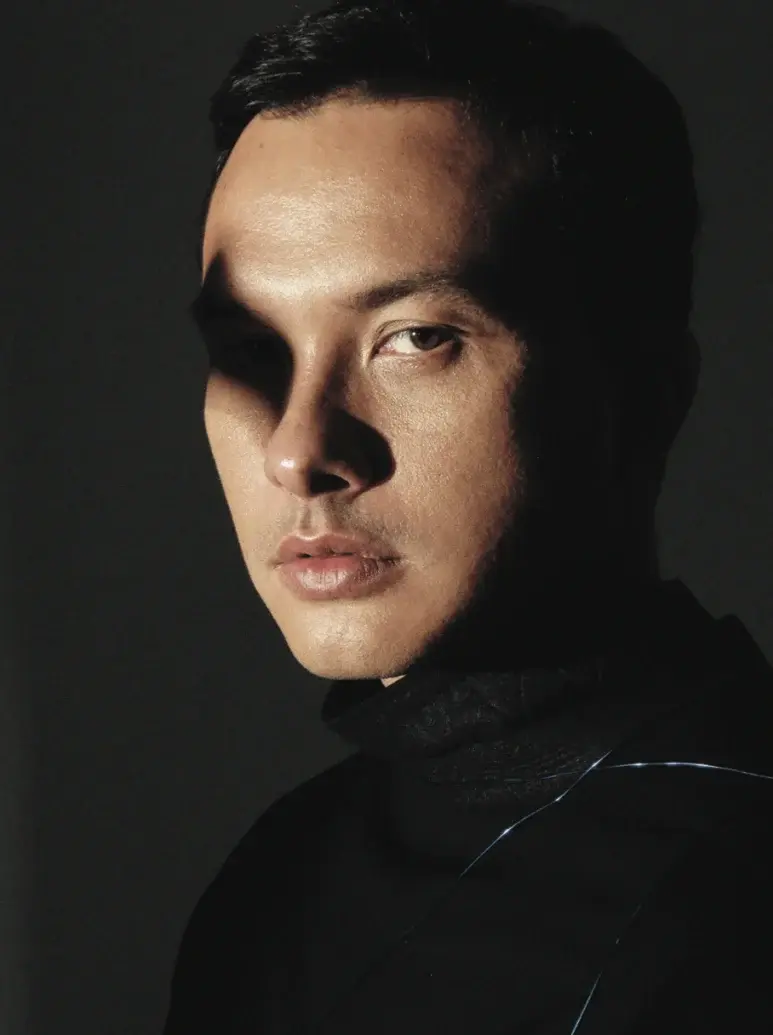
Nicholas Saputra
To discuss modern Indonesian pop culture without mentioning Nicholas Saputra is to ignore the foundation of contemporary cinema in the archipelago. In 2002, an independent teen romance titled Ada Apa Dengan Cinta? (What’s Up With Love?) debuted in theaters, instantly pulling the nation into collective hysteria. Saputra played Rangga, a reclusive, brooding high-school outcast who read classic poetry, avoided teenage cliques, and threw intense, devastating stares at the popular girl. In an instant, an entire generation of Indonesian youth lost their collective hearts to a young man who barely spoke ten words per scene.
Born to a German father and a Javanese mother, Nicholas represents the gold standard of intellectual, enigmatic allure. He has large, expressive eyes that seem to register every private sorrow of the universe, paired with curly dark hair and an aloof, aristocratic posture. He deliberately evaded the mindless celebrity machine. He never engaged in sensational television soap operas, avoided manufactured public scandals, and kept his private life locked away behind an impenetrable fortress. His social media presence features lush landscape photography, architecture, and wildlife, pointedly omitting selfies. This calculated absence created an aura of mythical mystery. He remains the eternal, unreachable dream of Indonesian cinema: a brilliant architect and actor whose quietude is louder than any publicity campaign.
Dian Sastrowardoyo
Directly opposite Nicholas Saputra stood Dian Paramita Sastrowardoyo, the woman who defined classic Indonesian beauty for the twenty-first century. As Cinta in Ada Apa Dengan Cinta?, Dian became the nation’s cinematic darling. She radiated radiant intelligence, expressive warmth, and a spirited, feisty personality that disarmed audiences immediately. Her on-screen chemistry with Saputra was so incandescent that decades later, fans still dissect every scene they shared, viewing their cinematic partnership as the definitive standard of Indonesian romance.
Dian leveraged her immense popularity to pursue challenging artistic avenues. She took on complex historical figures in films like Kartini, explored nuanced adult relationships in Aruna & Lidahnya, and entered gritty genre spaces with projects like The Night Comes for Us. Off-camera, she pursued advanced degrees in philosophy, championed arts education, and embraced high fashion with regal poise. She represents the ultimate realization of modern Indonesian womanhood: deeply rooted in cultural heritage, intellectually rigorous, and blessed with a luminous smile that can disarm the most cynical observer. She broke hearts by being the complete embodiment of grace, brains, and untouchable charm.
Singapore
Christopher Lee
Across the small island nation of Singapore, Caldecott Hill served as the engine of television fame for decades, and Christopher Lee was its most charismatic leading man. Born in Malaysia and establishing his career in the Lion City after winning the runner-up spot in the 1995 Star Search competition, Lee brought a towering, rugged masculinity that television dramas desperately needed. When he donned ancient flowing robes to portray Yang Guo in the 1998 adaptation of The Return of the Condor Heroes, his path toward regional stardom was permanently carved.
Lee carried an earthy, robust magnetism. He possessed a rich, booming laugh, an athletic build, and a boyish glint in his eye that matured into distinguished, salt-and-pepper maturity. His career was marked by dramatic highs, high-profile personal hurdles, and an astonishing artistic resurgence. He became the first Singapore-based actor to win the prestigious Best Leading Actor trophy at Taiwan’s Golden Bell Awards, proving his acting range went far beyond standard television tropes. His swagger was grounded in blue-collar authenticity and effortless humor, turning him into a pan-Asian heartthrob whose rugged charm deepened with every passing decade.
Fann Wong
Singapore possesses one true, indisputable Queen of Television: Fann Wong. Known affectionately throughout the region as the Ah Jie (Big Sister) of Mediacorp, Fann achieved an unprecedented level of local and international crossover appeal. Starting as a young model, she swept the Star Awards in 1995 by capturing both Best Actress and Best Newcomer in a single evening, a historic feat that cemented her destiny.
When she starred as Xiaolongnü (The Little Dragon Maiden) alongside Christopher Lee, her ethereal, porcelain elegance mesmerized millions of viewers across Asia.
Fann was a high-fashion visionary who treated the Singapore red carpet like a Milanese runway, pioneering daring, avant-garde couture choices that set entertainment outlets buzzing. She expanded her horizons to Hollywood, starring opposite Jackie Chan and Owen Wilson in Shanghai Knights, showcasing her comedic timing and physical agility to Western audiences. The ultimate fairy tale arrived when she and Christopher Lee took their real-life romance to the altar in 2009, broadcast live as a national television event. Fann remains the gold standard of Singaporean stardom: perpetually stylish, dazzlingly versatile, and blessed with an eternal, ageless glow that commands reverence everywhere she travels.
Taiwan
Takeshi Kaneshiro
To examine the concept of pure, pan-Asian heartthrobs is to arrive at the altar of Takeshi Kaneshiro. Born in Taipei to a Taiwanese mother and a Japanese father, Kaneshiro belongs to a rare tier of human beauty that transcends linguistic and national borders. He emerged during the golden pop era of the 1990s as one of Taiwan’s "Four Little Heavenly Kings," driving stadium crowds wild with pop records before visionary Hong Kong director Wong Kar-wai discovered his true, melancholy brilliance. In Chungking Express and Fallen Angels, Kaneshiro wandered neon-drenched nightscapes, eating expired cans of pineapple and speaking through a mute, expressive longing that left global cinema audiences completely spellbound.
Kaneshiro was blessed with features of astonishing symmetry: heavy brows, liquid dark eyes that held immense romantic sorrow, and a subtle half-smile that could convey amusement and heartbreak simultaneously. He dominated Japanese television dramas, starred in historic wuxia epics like House of Flying Daggers, and voiced iconic video game characters, moving through Tokyo, Taipei, and Hong Kong with effortless cosmopolitan cool. He guarded his personal existence with monk-like discipline, rarely stepping into the public eye outside of major film premieres. That reclusiveness amplified his mystique into folklore. He remains the ultimate tragic romantic figure of Asian cinema: devastatingly handsome, deeply solitary, and permanently etched into the romantic fantasies of millions.

Shu Qi
Taiwan has gifted the world extraordinary screen sirens, but Shu Qi remains its most intoxicating force of nature. Arriving in Hong Kong in the mid-1990s with nothing more than raw ambition and an electric, unconventional beauty, she dismantled traditional standards of feminine elegance. With her full, pillow lips, wide-set luminous eyes, and raspy, playful vocal cadence, she was an untamed breath of fresh air in an industry that favored predictable, pristine starlets.
Her artistic trajectory became one of the most triumphant journeys in cinema history. She transitioned from low-budget exploitation cinema into the muse of master auteur Hou Hsiao-hsien, delivering transcendent, award-winning performances in masterpieces like Millennium Mambo and The Assassin. Shu Qi moved across the screen like liquid grace, her sensuality was never mechanical, manifesting as a free-spirited, laughter-filled joy that drew every eye in the cinema toward her. She navigated high-profile, tempestuous romances with leading superstars before shocking the world by casually marrying her longtime friend, filmmaker Stephen Fung, announcing their nuptials with an unpretentious photoshoot in casual clothes. Shu Qi broke hearts across thirty years by living with unfiltered authenticity, transforming her unconventional allure into timeless, sovereign elegance.
China

Chen Kun
Mainland Chinese entertainment spent decades searching for a romantic lead who combined classic intellectual reserve with volcanic emotional depth, finding their answer in Chen Kun. Emerging from Chongqing and graduating with top honors from the legendary Beijing Film Academy, Chen captured the national consciousness in the iconic 2001 television series Love Story in Shanghai. Playing a young man caught in the tempest of early-twentieth-century passions, his striking, sharp-boned face and brooding expressions turned him into an overnight cultural obsession.
Chen possessed what Chinese critics reverently refer to as "eyes that speak." He can stand motionless in a scene, allowing an eyebrow to arch or a shadow to pass across his face, and convey an entire novel of unspoken desire and tragic consequence. In lavish fantasy cinema like Painted Skin, his romantic dilemma between a mortal wife and a demon temptress felt palpably agonizing because Chen radiates a fragile, dangerous vulnerability. Off the screen, he remained a poet and a seeker, launching his annual public-welfare project "Power to Go," where he leads groups of young people on silent, grueling spiritual treks through the mountains of Tibet and Qinghai. He is the melancholic prince of Chinese entertainment: aristocratic, artistically rigorous, and utterly intoxicating to anyone who appreciates thoughtful, smoldering masculine beauty.
Fan Bingbing
Before her career encountered turbulent regulatory waters, Fan Bingbing stood as an unassailable empire of modern Chinese celebrity. Beginning her career in the late 1990s in a supporting role in the epochal television smash My Fair Princess, she engineered one of the most ruthless and brilliant brand transformations in global entertainment history. She coined the famous phrase, "I do not need to marry into wealth; I am wealth," completely upending patriarchal expectations in the Chinese media landscape and crowning herself "Fan Ye" (Lord Fan).
Fan understood the visual theater of the red carpet better than any contemporary star on earth. When she arrived at the Cannes Film Festival wearing custom silk gowns featuring imperial dragon motifs, porcelain patterns, and crane embroidery, she turned international photo calls into sovereign coronation ceremonies. Her face was an engineering marvel of traditional Chinese aesthetic ideals: an immaculate oval jawline, porcelain-pale skin, and large almond eyes framed by raven hair. She played dangerous concubines, royal empresses, and seductive schemers with icy, unapologetic dominance. Fan Bingbing seduced the public imagination because she wore her ambition openly, conquering luxury brands, movie sets, and front-page news with an aristocratic majesty that left onlookers completely awestruck.
Hong Kong
Tony Leung Chiu-wai
To discuss seduction in world cinema without invoking Tony Leung Chiu-wai is an act of artistic negligence. Leung is the undisputed poet laureate of the human gaze. Honing his craft at TVB alongside the powerhouse actors of the 1980s, he evolved into the premier cinematic vessel for auteur Wong Kar-wai. In In the Mood for Love, Chungking Express, and Happy Together, Leung transformed unspoken desire into high art. He leans against a rainy alley wall, inhales a cigarette, lets his eyes linger on a passing silhouette, and the entire cinema collapses into shared romantic mourning.
Leung’s magnetism lies in his complete rejection of aggressive masculinity. He projects tenderness, quiet sorrow, and an infinite capacity to absorb emotional pain. His characters are men who love too deeply, who keep secrets locked in temple walls, and who suffer with quiet, devastating elegance. In Ang Lee’s erotic espionage masterpiece Lust, Caution, he revealed a darker, ferocious carnality that left audiences breathless. In real life, he is quiet, socially reserved, and passionately devoted to sailing and solitude, balancing the energetic social sphere of his wife, the formidable actress Carina Lau. Tony Leung breaks hearts without speaking a single line of dialogue; he simply looks across the room, and the audience surrenders unconditionally.
Maggie Cheung
Standing beside Tony Leung in the pantheon of cinematic grace is Maggie Cheung Man-yuk. Beginning her public life as the vivacious, bubbly runner-up of the 1983 Miss Hong Kong pageant, Maggie spent her early years playing cheerful girlfriends in Jackie Chan action comedies. Then arrived a transformation that reshaped Asian cinema. Working with auteurs like Wong Kar-wai, Stanley Kwan, and Olivier Assayas, Maggie blossomed into an acting titan, capturing four Golden Horse Awards and five Hong Kong Film Awards for Best Actress, alongside historic triumphs at Cannes and Berlin.
Her portrayal of Su Li-zhen in In the Mood for Love, gliding through cramped corridors in high-collared, tailor-made cheongsams, remains the definitive portrait of romantic restraint in film history. Maggie possessed an extraordinary, sinuous posture, a sculpted cheekbone structure, and an expressive, melancholy smile that could convey joy and tragedy in equal measure. Her seduction was completely modern; she lived with worldly independence, moved to Paris, designed fashion lines, and played indie-rock music in later years, completely indifferent to traditional social expectations. She broke hearts by maintaining absolute sovereignty over her life, remaining an eternal, unreachable ideal of cosmopolitan feminine grace.
Japan
Takuya Kimura
In Japan, the phenomenon of stardom is divided into two distinct historical eras: before Takuya Kimura, and after Takuya Kimura. Rising to fame as the central engine of the legendary boy band SMAP, "Kimutaku" transformed into a cultural force of such magnitude during the 1990s and early 2000s that social scientists actively studied his economic impact. When he starred in a prime-time television drama, the entire country stayed home. Long Vacation, Love Generation, and Beautiful Life generated astronomical ratings, turning his hairstyles, leather jackets, and catchphrases into instant national law. When he served as the face of a women’s lipstick brand in 1996, the posters were systematically stolen from subway stations, and millions of units sold out within days.
Kimura possessed an electrifying, androgynous sensuality that redefined modern Japanese masculinity. With flowing dark locks, a plump, pouty lower lip, and an athletic, rebellious attitude, he walked with a swagger that challenged traditional corporate norms. His gaze down the camera lens was intimate and direct, making every viewer feel as though they were sharing a private, dangerous secret with him. When he announced his marriage to fellow pop star Shizuka Kudo at the apex of his fame in 2000, public broadcaster NHK treated the news as a national event on par with the passing of a head of state. Kimura seduced an entire archipelago because he walked through Japanese society with effortless defiance, breaking traditional boundaries while remaining utterly beloved.

Namie Amuro
From the tropical island of Okinawa emerged a young woman who completely conquered the fashion and musical landscape of Japan: Namie Amuro. Exploding onto the scene in the mid-1990s under the production wizardry of Tetsuya Komuro, Amuro became a phenomenon known as "Amuraa." Thousands of young Japanese women copied her personal style down to the millimeter: sun-bronzed skin, pencil-thin eyebrows, miniskirts, and platform boots, transforming the streets of Shibuya into a living tribute to her visual aesthetic.
Amuro was pure fire and iron discipline. On stage, she was an athletic marvel, executing complex, high-energy dance routines for two continuous hours in towering high heels without missing a vocal note or uttering a single spoken interlude. Her beauty combined delicate features with a fierce, cool detachment that felt empowering to women and completely intoxicating to men. She weathered immense personal family tragedies and industry turbulence with quiet, stoic dignity, rebuilding her career into an even larger stadium empire in the 2000s and 2010s. When she announced her complete retirement from the entertainment industry at the age of forty, departing on her own terms at the height of her powers, she left millions of fans in tears. She was the ultimate siren of modern Japan: stylish, unyielding, and forever master of her own destiny.
South Korea

Won Bin
In the ferociously competitive ecosystem of Hallyu, where modern stars work exhausting promotional schedules to stay relevant, Won Bin exists on a celestial plane of his own design. Exploding into tears and glory in the landmark 2000 drama Autumn in My Heart, his role as the wealthy, devoted hotel heir who loses his love to tragedy broke hearts across East Asia. His face was declared a national monument of aesthetics: razor-sharp cheekbones, a noble nose bridge, and wide, sorrowful eyes that seemed to belong to an ancient painting.
Won Bin cemented his legendary status through his extraordinary physical transformation in the 2010 action masterpiece The Man from Nowhere (Ajeossi). The scene where his character silently shaves his own head in a bathroom mirror before launching a bloody rescue mission remains an immortal moment of masculine charisma in Korean cinema history. Following that monumental success, Won Bin effectively vanished from acting, stepping away from the screen for well over a decade, appearing solely in occasional boutique commercial endorsements. He married actress Lee Na-young in a private, pastoral ceremony in a remote wheat field, completely shunning high-society spectacle. This legendary absence turned him into an untouchable myth. He remains the definitive face of Korean male beauty: perfect, elusive, and permanently frozen in a state of smoldering cinematic perfection.
Song Hye-kyo
If Korean drama has a reigning supreme empress, she answers to the name Song Hye-kyo. Dominating television screens across Asia for over twenty-five years, Song has been the face of Hallyu since its inception. From Autumn in My Heart to Full House, Descendants of the Sun, and her chilling dramatic masterclass in The Glory, she has navigated the evolving landscape of Asian television with flawless commercial instinct and devastating charisma.
Song is blessed with a timeless, porcelain beauty that appears completely immune to the passage of time. She possesses large, expressive eyes that produce the most devastating tears in television history, alongside an aristocratic composure that commands respect. Her off-screen romantic life has been the centerpiece of Asian entertainment gossip for two full decades, with high-profile relationships and an iconic marriage that captured international headlines. When personal storms arrived, Song held her ground with majestic serenity, channeling her experiences into daring, complex artistic choices. Her performance in The Glory stripped away conventional glamour to deliver cold, brilliant dramatic fury, proving that her artistic talent is as sharp as her visual allure. Song Hye-kyo remains an irresistible force: regal, mysterious, and permanently etched into the hearts of drama lovers across the continent.
Philippines
Piolo Pascual
In the vibrant, passionate world of Philippine entertainment, titles are earned through blood, sweat, and decades of relentless charm, and Piolo Pascual holds the absolute crown as the country’s "Ultimate Heartthrob". Emerging into national prominence during the late 1990s, "Papa P" redefined romantic leading men on television and cinema screens. His historic on-screen partnership with Judy Ann Santos in dramas like Esperanza and Sa Puso Ko Iingatan Ka drove television ratings into the stratosphere, establishing him as the golden boy of ABS-CBN.
Pascual is the complete package of Filipino stardom: a radiant, dimpled smile, deeply expressive eyes, an athletic physique, and an innate, gentle courtliness that disarms audiences instantly. He possesses an uncanny ability to project profound sincerity on screen; in cinematic classics like Milan and Starting Over Again, his romantic vulnerability left movie theaters across the archipelago in collective sobs. Beyond his visual appeal, he proved his dramatic mettle in films like Dekada '70, winning every major supporting actor award in the country. In his late forties, he continues to out-charm men half his age, balancing triathlons, film production, and philanthropy. He remains the eternal boyfriend of the Philippines: handsome, deeply respectful, and effortlessly captivating.
Marian Rivera
When GMA Network adapted the iconic Mexican telenovela Marimar in 2007, they ignited a pop-culture supernova in the person of Marian Rivera. Born in Madrid to a Spanish father and a Filipina mother and raised in Cavite, Marian brought a fiery, dancing, sun-drenched sensuality that completely overtook the country. Her entrance on screen, barefoot in the sand, dancing with infectious joy and flashing a brilliant smile, pulled television ratings to astronomical heights. When she followed that by donning the crimson costume of the iconic superheroine Darna, her coronation as the Primetime Queen of Philippine television was complete.
Marian possesses a dazzling, high-voltage beauty: fierce almond eyes, sculpted Latin-Asian features, and a hearty, unrestrained laugh that feels gloriously grounded. She never projected a fragile, helpless persona. She is spirited, outspoken, and protective of her craft and family. Her on-screen chemistry with co-star Dingdong Dantes became one of the country’s greatest real-life love stories, leading to a royal wedding celebration that stopped traffic across Metro Manila. Marian captivated the nation because her allure is overflowing with vitality, warmth, and an unapologetic fire that makes it impossible to look anywhere else.
India
Shah Rukh Khan
To survey the continent of Asia and omit the romantic empire of Mumbai is to ignore the greatest romantic idol in the history of cinema. Shah Rukh Khan, reverently crowned "King Khan" and the "Badshah of Bollywood," has spent over thirty years teaching billions of human beings how to fall in love. Beginning his career playing volatile, obsessive anti-heroes in films like Darr and Baazigar, he pivoted to redefine modern romantic cinema in the epochal 1995 masterpiece Dilwale Dulhania Le Jayenge, a film that played continuously in Mumbai theaters for over a quarter of a century.
Khan’s seductive power is unprecedented. He is not a conventional, muscle-bound action prototype; he conquered the world with his mind, his wit, and his total emotional abandon. When he spreads his arms wide in an open field, drops his gaze, and lets his dimpled smile flash across the screen, cynical defenses evaporate completely. He possesses an extraordinary, rapid-fire eloquence and self-deprecating humor that disarms global interviewers and stadium audiences alike. In his late fifties, he reinvented his career into high-octane action blockbusters like Pathaan and Jawan, proving his physical charisma is indestructible. He broke hearts across continents because he convinced generations of moviegoers that love is an epic, spiritual quest worth sacrificing everything to achieve.
Aishwarya Rai Bachchan
Long before the West discovered modern Indian cinema, Aishwarya Rai conquered the globe through sheer, unassailable visual majesty. Winning the Miss World crown in 1994, she arrived with a presence that left judges, audiences, and fashion houses completely stunned. Her features seemed almost digitally generated: rare, piercing blue-green eyes framed by dark lashes, perfect symmetry, and a regal, dancer’s posture honed through rigorous classical Bharatanatyam training.
In cinematic masterpieces like Sanjay Leela Bhansali’s Hum Dil De Chuke Sanam and Devdas, Aishwarya was incandescent. She did not simply perform; she glided through opulent sets, expressing profound, operatic grief and passion through intricate eye movements and exquisite dance sequences. Her appearances at the Cannes Film Festival over two decades became major annual cultural moments, carrying the rich pageantry of Indian fashion to international photographers. Even after marrying into the legendary Bachchan film dynasty, she maintained her sovereign aura. Aishwarya Rai represents the pinnacle of classical Eastern glamour: untouchable, majestic, and blessed with an intoxicating beauty that remains legendary across world cinema.
Observing these twenty-two icons across eleven Asian cultures illuminates the secret engine of Asian celebrity allure. Western pop culture often equates sex appeal with naked provocation or manufactured scandal. In Asia, the stars who achieve true, immortal adoration understand that real intoxication is an art of patience, discipline, and emotional resonance.
They are actors who know how to convey a universe of desire in a solitary, unbroken glance across a crowded tea room. They are performers who understand that romance is elevated when mixed with danger, intellect, sovereign independence, and a touch of melancholy. From the neon-lit alleyways of Hong Kong and the humid movie sets of Bangkok to the sweeping sets of Mumbai and the glamorous studios of Seoul, these men and women broke hearts with effortless grace. They gave their respective cultures reasons to dream, to swoon, and to believe that under the right cinematic light, human charisma can truly conquer the world.


Comments